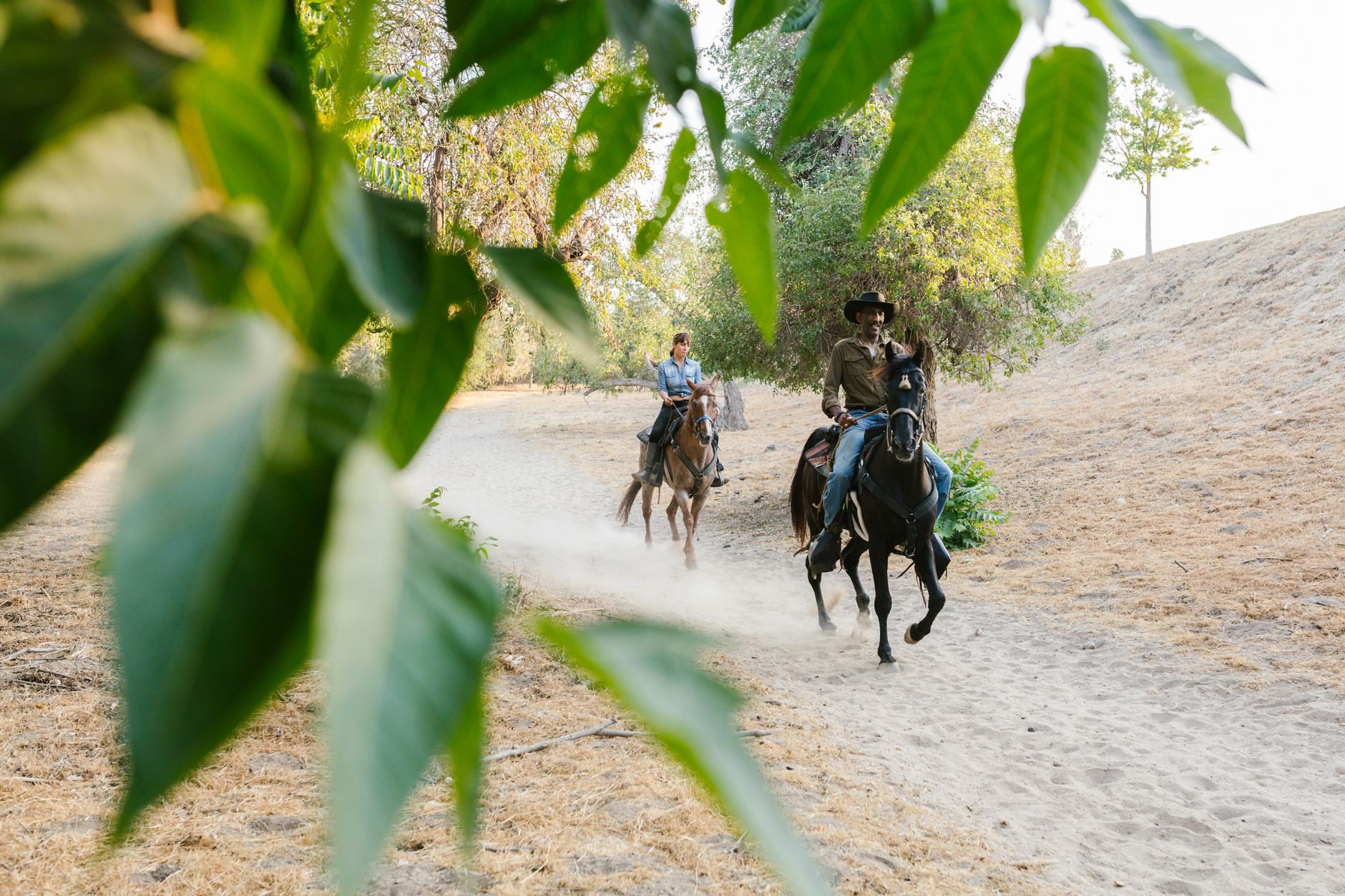
Horse riding is one of those experiences that stays with you long after you've dismounted. The rhythm of the horse beneath you, the open trail ahead, and the quiet partnership between rider and animal create something genuinely hard to replicate. If you've been thinking about giving it a go, or you're curious about what a trail ride really involves, this guide covers the essentials from what to wear to how to communicate with your horse.
Why horse riding appeals to so many people
People come to horse riding for all sorts of reasons. Some are drawn by childhood dreams, others by a desire to explore landscapes that can't be reached on foot or by bike. Riding through native bush, across open paddocks, or along mountain ridges offers a perspective that's genuinely different from any other outdoor pursuit. There's also a social element: a guided trail ride is a brilliant way to spend time with friends or family, and the shared experience of navigating new terrain together tends to create lasting memories.
Beyond the scenery, riding has real physical benefits. It engages your core, improves balance and posture, and requires a level of body awareness that most gym-based exercise doesn't ask for. Many riders also find it mentally calming. Horses respond to your energy, which means staying relaxed and present isn't just good manners toward the animal. It's a practical necessity.
What to expect on your first ride
For beginners, the first session usually covers three things: how to mount and dismount safely, how to sit in the saddle, and how to use basic aids (the signals you give the horse through your hands, legs, and seat). Most guided operations match riders to horses based on experience level, so you're unlikely to be handed the most spirited animal in the yard on day one.
A good riding guide will walk alongside or nearby during early lessons, giving quiet corrections and encouraging riders to find their own balance rather than gripping tight and bracing against every movement. The natural instinct for new riders is to tense up, but relaxing into the horse's movement is what makes riding feel effortless rather than exhausting. That shift, from fighting the motion to flowing with it, usually happens within the first hour for most people.
Gear and clothing for a trail ride
You don't need to invest in specialist riding gear before your first outing. Most reputable operations provide helmets, and some offer half-chaps or boots as well. What matters most from your own wardrobe is reasonably fitted trousers (nothing too loose or with thick inner seams that will rub), a comfortable top appropriate for the weather, and closed-toe shoes with a small heel to keep your foot from sliding through the stirrup.
In cooler months, layering is key. Mornings in the hills can be brisk, and a light jacket that can be tied around your waist once you warm up is more practical than a single heavy coat. Sun protection is equally important in summer: a hat that fits under a riding helmet, sunscreen, and sunglasses with a strap are all sensible additions to your kit bag.
Reading the horse: basics of communication
Horses communicate constantly through body language, and part of what makes riding interesting is learning to read those signals. Ears pinned flat usually mean irritation or anxiety. Soft, relaxed ears that swivel gently mean the horse is comfortable and paying attention. A low, swinging head is a sign of a relaxed animal, while a high, tense neck often signals alertness or mild unease.
As a rider, your job is to give clear, consistent signals and then reward the right response by releasing the pressure. This isn't about dominance. It's about conversation. Horses are sensitive enough to feel a fly landing on their coat, which means the aids you give through your legs and hands don't need to be forceful to be effective. Quiet, steady communication nearly always gets a better response than sharp commands.
Choosing the right ride for your level
Trail rides typically range from one-hour introductory loops to full-day or multi-day hut-to-hut adventures. Beginners are generally best served by a shorter ride that focuses on building confidence and basic skills before committing to a longer journey. Half-day rides are a good middle ground: long enough to feel genuinely immersive, but short enough that fatigue (yours or the horse's) doesn't become an issue.
Longer rides, especially overnight or multi-day trips, open up country that shorter outings can't reach. Staying in remote huts, watching horses graze at dusk, and waking up to a trail that winds through otherwise inaccessible terrain is an experience in a different category altogether. If that kind of adventure appeals, building up gradually through a few shorter rides first will make the longer journey considerably more comfortable and enjoyable.
Respecting the animals and the environment
Responsible horse riding means thinking about the animals and the land, not just the experience. Horses need proper rest, appropriate workloads, and consistent care. When you choose an operation, it's worth asking a few questions: how often do the horses work, how are they kept, and what happens during the off-season? An operation that's proud of its animal welfare practices will welcome those questions rather than deflect them.
On the trail, staying on marked routes, keeping noise to a reasonable level, and following your guide's instructions all help protect the landscape and keep the ride safe. Many riding trails pass through working farmland or conservation areas, and the privilege of access depends on riders behaving well. Taking that responsibility seriously is part of what makes the horse riding community worth being part of.